
The Cut List · Buying Guide
Custom vs. Semi-Custom Cabinets: An Honest Comparison from a Shop Floor
We build fully custom cabinetry for a living, so you'd expect this article to end with "buy custom." It doesn't — not always. After twenty-five years in Chatham, we've told plenty of homeowners that semi-custom was the right call for their kitchen. Here's the difference between custom and semi-custom cabinets explained the way we'd explain it across a workbench, including the cases where the factory line genuinely wins.
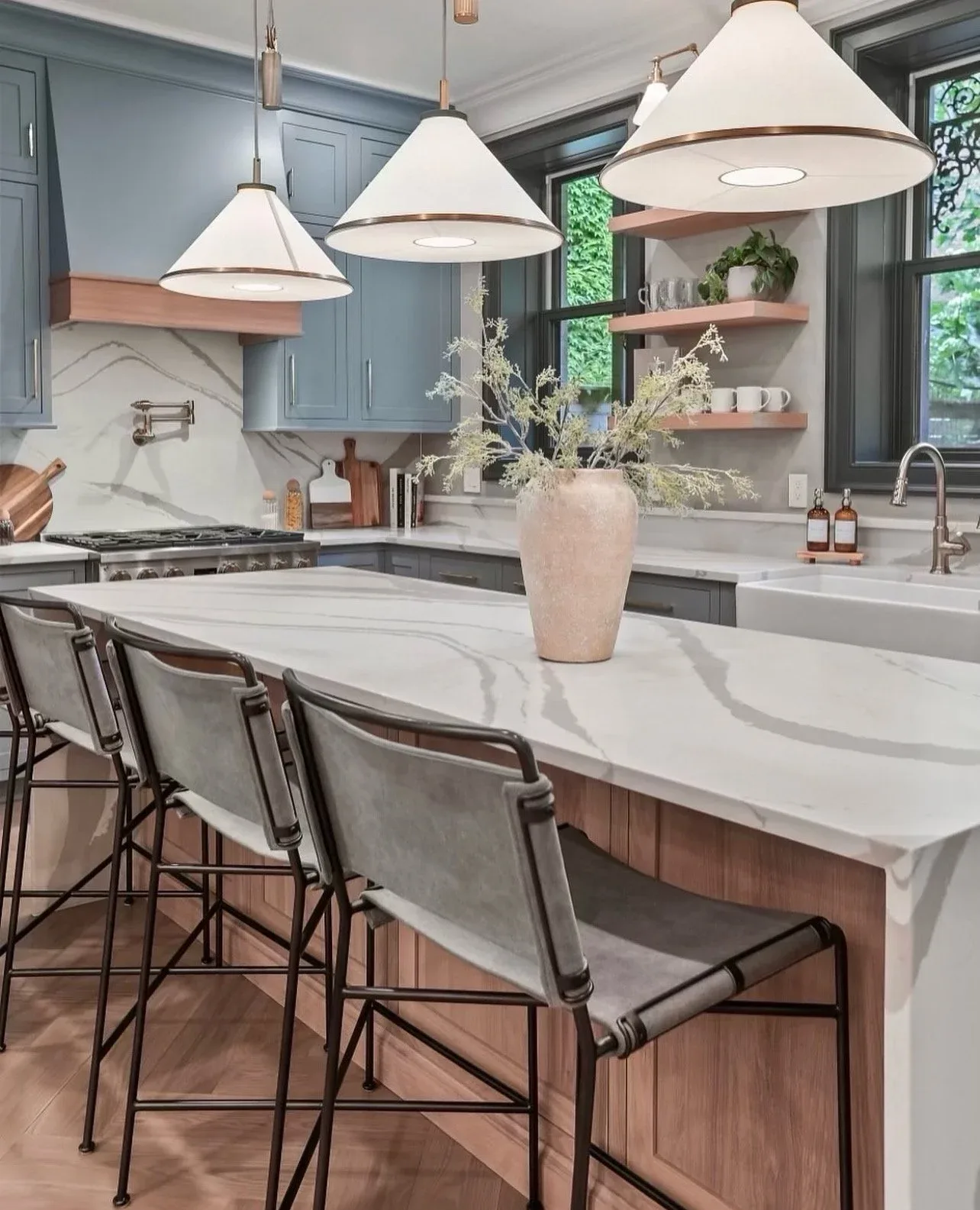
What the words actually mean
Stock cabinets are pre-built boxes in fixed sizes, sold off the shelf. Semi-custom cabinets start from the same factory system but offer modification menus — more sizes, more door styles, some depth changes, a bigger finish deck. Custom cabinets aren't a modification of anything. They begin as a blank sheet of paper and a tape measure in your kitchen: every box, door, and drawer is designed for your walls and built for the first time, for you.
Where semi-custom genuinely makes sense
- Regular rooms. If your kitchen is a clean rectangle with standard ceiling heights and no quirks, factory increments may fit with minimal filler.
- The catalog has your look. If you want a white shaker overlay kitchen — the most popular kitchen in America for a reason — every semi-custom line offers a competent one.
- A firm budget. Semi-custom NJ kitchens commonly run $15,000–$40,000. If that's the ceiling, a good semi-custom line beats a stretched, corner-cut custom job.
- Speed over specificity. Factory lead times can beat a one-bench shop's queue. If the renovation schedule rules, that matters.
What semi-custom quietly costs you
Fit. Factory boxes come in increments; your walls don't. The difference is bridged with filler strips — those flat, dead pieces between cabinet and wall. A custom kitchen has no fillers because every box is built to the wall it lives on, including the out-of-plumb plaster in your 1920s colonial in Westfield. (Built-ins make this gap most visible — see Built-Ins That Look Original to the House.)
Construction. Inset doors hung flush in their frames, dovetailed hardwood drawers, full-depth shelves, furniture details on islands — these live at the top of factory option lists, priced accordingly, or aren't offered at all. In a custom shop they're just how we build.
Finish. A factory finish is consistent — and anonymous. A shop-sprayed finish can be color-matched to anything, layered, glazed, or tweaked between coats. Ten years from now, when a line is discontinued, a factory door can't be matched. We can walk into a kitchen we built in 2008 and make a new door disappear into it.
A person who answers. When something settles or a hinge sags in year six, a factory warranty is a process. A shop is a phone call — 908-361-3192, and June will find time on Russell's calendar.
The money, side by side
In 2026 New Jersey terms: semi-custom kitchens commonly land at $15,000–$40,000, fully custom at $30,000–$80,000 (we break down what drives that range in What Custom Kitchen Cabinets Really Cost in New Jersey). The overlap is real: a modest custom kitchen can cost less than a heavily-optioned semi-custom one. Always price both before assuming custom is out of reach.
The five-question test
- Does your room have irregular dimensions, old-house quirks, or an awkward corner the design must solve?
- Do you want inset doors, dovetailed drawers, or a furniture-grade island?
- Is there a specific look in your head that no catalog page matches?
- Do you plan to be in this house ten-plus years?
- Does the idea of filler strips bother you now that you know what they are?
Two or more yeses and you should at least price custom. Five noes and we'll happily point you toward a good semi-custom line — seriously.
Not sure which side you're on? Bring us the room. The consult is free, in-home, and ends with an honest recommendation — even when the recommendation isn't us.
Book a free consultFAQ
What's the main difference between custom and semi-custom?
Semi-custom modifies factory boxes; custom starts from nothing and builds to your exact room, construction choices included.
Is semi-custom ever the smarter buy?
Yes — regular room, catalog look, firm budget, tight schedule. We say so to clients' faces.
Do custom cabinets last longer?
Built and finished well, meaningfully — hardwood drawers, serviceable joinery, and a finish that can be repaired or matched decades later instead of replaced.